Conversion optimisation: getting more from your website in a downturn

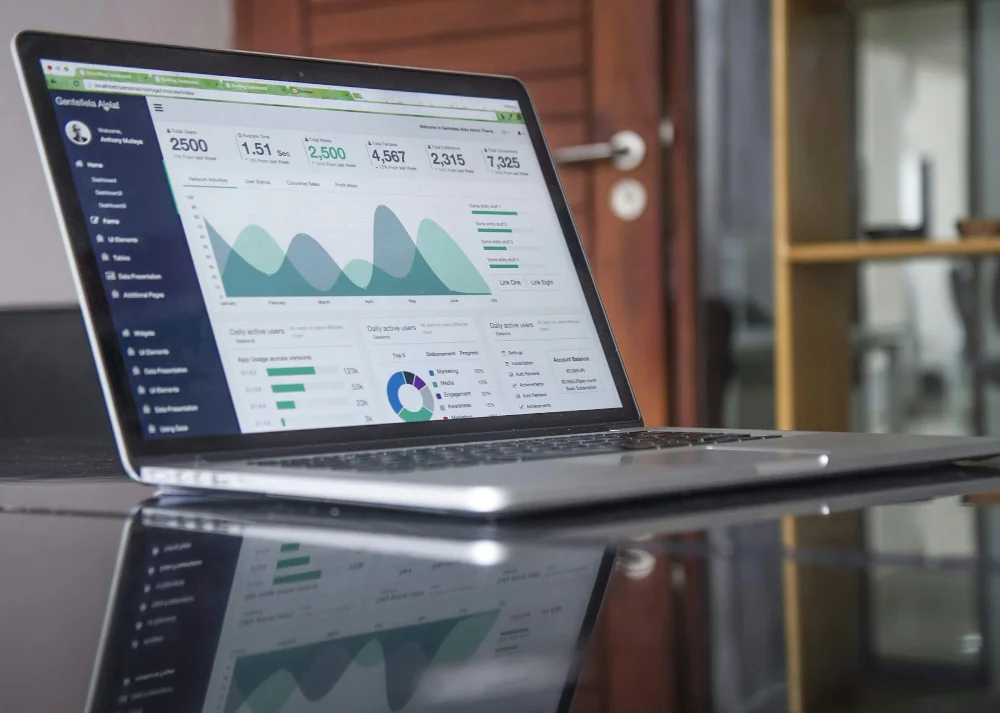
Person reviewing website analytics on a MacBook — conversion optimisation in action

When times are tight, the instinct for many business owners is to spend more on advertising to generate leads. But there’s a more effective – and more affordable – approach that’s often overlooked: making your existing website work harder.

Conversion optimisation is the practice of improving your website so that more of your existing visitors take a meaningful action – whether that’s completing an enquiry form, requesting a quote, or picking up the phone. It’s not about driving more traffic; it’s about getting better results from the traffic you already have.

For SMEs navigating economic uncertainty, that distinction matters. Every visitor who leaves your site without making contact represents a missed opportunity – and when budgets are under pressure, those missed opportunities become more costly.

Why conversion optimisation makes sense right now
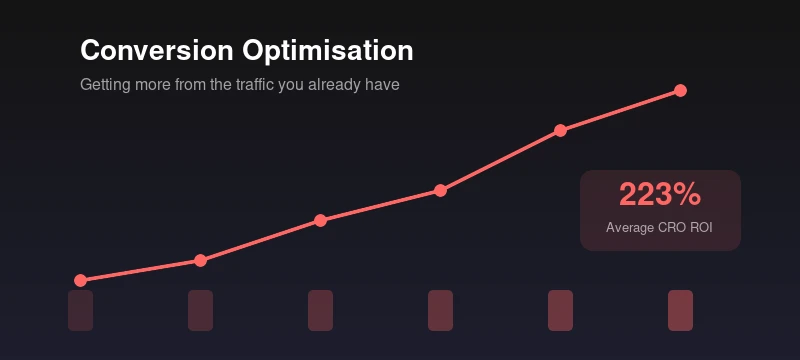
Chart showing conversion optimisation delivers an average 223% ROI

Most businesses already invest in some form of marketing – whether that’s SEO, Google Ads, social media, or simply word of mouth. All of these channels drive visitors to your website. But if your site isn’t converting those visitors effectively, you’re leaving value on the table regardless of how much you spend on getting people there.

Conversion optimisation flips the equation. Instead of asking “how do we get more traffic?”, it asks “how do we get more from the traffic we have?”. In a downturn, this is a smarter question to be asking – because the return on investment can be significant without requiring additional marketing spend.

Companies using conversion optimisation tools and techniques see an average return on investment of 223%. That’s because even small improvements – a clearer call to action, a faster-loading page, a simpler form – can have a measurable impact on enquiry rates.

Where most websites lose visitors

Understanding where and why visitors leave without converting is the first step. In our experience working with SME websites, the most common issues tend to fall into a few key areas.

2.9%

Average website conversion rate across industries

Source: Unbounce 2023

7%

Conversion drop for every extra second of load time

Source: Portent

81%

Of users abandon a form after starting it

Source: Formstack

Page speed

This is one of the biggest and most overlooked factors. Research consistently shows that every additional second of page load time reduces conversions by around 7%. A site that loads in one second converts at roughly double the rate of one that takes five seconds. For a business generating enquiries through its website, that’s not a minor detail – it’s the difference between a pipeline that grows and one that stalls.

Unclear calls to action

Many SME websites have good content but don’t make it clear what the visitor should do next. If your call to action is buried at the bottom of a long page, or uses vague language like “Learn More”, visitors are far less likely to take the step you want them to. Effective calls to action are visible, specific, and positioned where they make sense in the visitor’s journey.

Forms that ask too much

Contact forms are often the final hurdle between interest and enquiry – and it’s where a surprising number of websites lose people. With 81% of users abandoning forms after starting them, reducing the number of fields to only what’s essential can have a dramatic effect. If you’re asking for a company name, job title, phone number, message, and reason for enquiry before someone can say hello, you’re creating unnecessary friction.

Weak trust signals

When someone visits your website for the first time, they’re making a quick judgement about whether to trust you. Client testimonials, case studies, recognisable logos, industry accreditations, and clear contact information all play a role. Without these, visitors may feel uncertain – and uncertain visitors don’t convert.

Poor mobile experience

Mobile now accounts for over half of all web traffic, yet many business websites still treat mobile as an afterthought. Buttons that are too small, text that’s hard to read, and forms that don’t work properly on a phone all reduce the chance of conversion. A website that looks polished on desktop but frustrates on mobile is losing enquiries every day.

Practical steps you can take

The good news is that conversion optimisation doesn’t require a complete website rebuild. Many of the most effective improvements are relatively straightforward to implement and can start showing results quickly.

Common IssueQuick Win
Slow page load (3+ seconds)Optimise images, enable caching, reduce unused plugins
Generic CTA (“Learn More”)Use specific, action-oriented language (“Get a Free Quote”, “Book a Call”)
Long contact form (8+ fields)Reduce to 3–5 essential fields – name, email, message
No social proof visibleAdd testimonials and client logos near key conversion points
CTA only at page bottomAdd a clear CTA above the fold and repeat after key sections
Mobile forms hard to useTest all forms on mobile – ensure buttons and fields are thumb-friendly

1. Audit your key pages

Start with the pages that matter most – your homepage, services pages, and contact page. Look at them from a visitor’s perspective: is it immediately clear what you do, who you help, and how to get in touch? Tools like Google Analytics can show you where visitors are dropping off, giving you a clear starting point.

2. Simplify the path to enquiry

Remove unnecessary steps between a visitor arriving on your site and making contact. That might mean adding a prominent call to action higher up the page, simplifying your contact form, or making your phone number more visible. Every click or scroll that isn’t needed is an opportunity for someone to leave.

3. Strengthen your trust signals

Review your website through the eyes of someone who has never heard of your business. Do you have client testimonials displayed prominently? Are your case studies easy to find? Is it clear how long you’ve been in business and what kind of clients you work with? These details may feel secondary, but they directly influence whether a visitor feels confident enough to make contact.

4. Improve Page speed

Use Google’s free PageSpeed Insights tool to check how your key pages perform. Common fixes include optimising image sizes, enabling browser caching, reducing the number of plugins, and ensuring your hosting is up to the task. Even modest improvements in load time can translate to measurably better conversion rates.

5. Test and measure

Conversion optimisation is not a one-off task. The most effective approach is to make changes, measure the results, and refine over time. Set up goal tracking in Google Analytics so you can see exactly how many visitors are completing your desired action – and whether that number improves as you make changes.

Your conversion optimisation checklist

  • Run Google PageSpeed Insights on your homepage and key service pages
  • Check your contact form – can someone get in touch in under 30 seconds?
  • Review your calls to action – are they visible, specific, and above the fold?
  • Ensure testimonials or case studies appear on your most-visited pages
  • Test your entire enquiry journey on a mobile phone – start to finish
  • Set up Google Analytics goal tracking for form submissions and phone clicks
  • Remove unnecessary distractions – pop-ups, sliders, competing CTAs

Making it count in 2026

In an environment where every pound of marketing spend is under scrutiny, conversion optimisation represents one of the most efficient investments a business can make. It doesn’t require a large budget, it builds on what you already have, and the improvements compound over time.

The average website converts at around 2–3%. That means 97 out of every 100 visitors leave without taking action. Even moving that number by one percentage point can have a meaningful impact on your pipeline – particularly for service-based businesses where each new enquiry carries real value.

At 4D Digital we regularly help clients improve their website performance through practical, data-led conversion optimisation. Whether it’s a focused review of your key pages or a broader strategy to improve enquiry rates, we can help you get more from the website you already have. Get in touch if you’d like to talk it through.

WordPress website care & support: why ongoing care matters

WordPress website design

For many SMEs, a WordPress website is no longer just a brochure – it’s a core business tool. It generates enquiries, supports sales, reinforces credibility, and increasingly plays a role in how your business appears in search and AI-driven results.

Yet one of the most common misconceptions we see is that a website is “finished” once it goes live.

In reality, WordPress websites require ongoing care and support to stay reliable, visible, and effective. That’s why at 4D Digital we talk about WordPress Website Care and Support, not just maintenance. It’s about actively looking after your site so it continues to support your business goals in 2026 and beyond.

WordPress website design

Why WordPress care is a business issue, not a technical one

WordPress evolves constantly. Core updates, plugin changes, browser updates, and hosting environments all move on – whether your website does or not.

Without regular care, even a well-built site can slowly degrade:

  • Pages load more slowly
  • Features stop working as expected
  • Compatibility issues creep in
  • Search visibility can quietly slip

From a business perspective, this shows up as lost enquiries, poorer user experience, and reduced confidence in your website as a sales tool. Ongoing care ensures your site continues to work as intended, rather than becoming a liability over time.

Updates, stability and peace of mind

Regular updates are a fundamental part of WordPress care – not just for security, but for stability and compatibility. Plugins and themes that fall behind can conflict with newer versions of WordPress, causing layout issues, broken forms, or unexpected errors.

A structured care plan ensures updates are applied in a controlled way, issues are spotted early, and your site remains stable. Just as importantly, it removes the mental overhead for business owners. You don’t need to wonder “Is my website still OK?” – it simply is.

Backups and business continuity

Even with the best care, things can occasionally go wrong. Updates fail, hosting environments change, or mistakes happen.

Regular, automated backups are a quiet but critical part of website support. They mean that if something does go wrong, your website can be restored quickly with minimal disruption. From a business point of view, this is about continuity – avoiding downtime, lost leads, or emergency rebuilds.

It’s not about expecting failure; it’s about being prepared so small issues never become big problems.

Performance, speed and user experience

Website performance plays a growing role in both conversion rates and search visibility. Slow pages frustrate users, reduce engagement, and are less likely to perform well in Google or AI-assisted search results.

Ongoing WordPress care includes performance monitoring and optimisation:

  • Keeping the site lean as content grows
  • Optimising images and assets
  • Ensuring hosting and caching remain fit for purpose

The result is a website that feels fast, professional, and easy to use – which directly supports enquiries and conversions.

Visibility in search and AI results

Search engines increasingly favour websites that are technically sound, fast, and consistently maintained. In 2026, this also extends to how AI systems interpret and recommend businesses.

A well-cared-for WordPress site:

  • Loads reliably for users and crawlers
  • Avoids technical issues that limit visibility
  • Provides a stable platform for SEO and content growth

Website care doesn’t replace SEO – but without it, SEO efforts are often undermined.

Support that grows with your business

One of the advantages of WordPress Website Care and Support is flexibility. As your business grows, your website often takes on more responsibility – more traffic, more integrations, more content.

A scalable care plan allows support to grow alongside your needs, without the cost or complexity of in-house technical management. It’s about having the right level of support at each stage of your business.

In summary

WordPress Website Care and Support is about protecting the value of your website over time.

It ensures your site:

  • Remains reliable and up to date
  • Delivers a strong user experience
  • Supports visibility in search and AI results
  • Continues to generate enquiries and sales

For SMEs, it’s one of the simplest ways to turn a website from a static asset into a dependable part of your business infrastructure.

Optimising your website for AI search in 2026

An illustration of an office meeting

The world of search is changing quickly. What used to be a simple list of blue links is becoming AI-generated answers, summaries, and conversational responses powered by systems like Google’s AI Overviews and assistants such as ChatGPT and Perplexity.

For business owners, this shift isn’t just another SEO buzzword – it’s a new way customers find answers, make decisions, and discover services online. And your website needs to be ready if you want to be chosen by AI as well as humans.

An illustration of an office meeting

Why AI search matters (now and over the next 12 months)

AI search is rewriting the visibility rulebook

Traditional SEO aimed to rank your page high on search engine results pages (SERPs). But AI search – especially features like Google AI Overviews – often generates above-the-fold answers that summarise content from multiple sources. Users get their answers without clicking through – meaning less guaranteed traffic from organic listings if you do nothing.

Even big publishers are feeling the impact of this “zero-click” world.

At the same time, AI search presents a huge opportunity:

  • AI-driven answers often cite or reference trusted sources – meaning if your content is structured and authoritative, it can be the one quoted in responses.
  • Traffic from AI search is highly intent-driven – users are often closer to a purchase or decision when they ask a direct question.
  • Early movers – websites optimised for AI search – are already seeing more mentions in AI results versus competitors.

AI search vs traditional SEO

Traditional SEOAI-Driven Search Optimization
Keyword ranking within a listContent cited or summarised as the answer
Focus on links & click-throughFocus on relevance, clarity, authority
Meta title & description impactStructured content + schema increase AI relevance
Backlinks as key authorityAI looks for context, expertise, clarity

This isn’t to say traditional SEO is dead – far from it. But AI search reframes the job: instead of “rank highest”, the new goal is be the most trusted, clear, and answerable source for the questions your customers actually ask.

How AI search engines decide what to show

AI-powered search engines use large language models (LLMs) that:

  1. Understand natural language – not just exact keywords.
  2. Identify intent – what the user really wants answered.
  3. Synthesise information from multiple sources – then generate a response or summary.

Unlike traditional crawlers that index and retrieve, AI interprets and answers. This means your content must be:

  • Clear and authoritative – AI favours information it can confidently summarise.
  • Structured logically – sections, headings, lists, FAQs help AI parse and re-use content.
  • Trustworthy – signals like expert authorship, up-to-date content, citations and reviews matter.

Practical ways to optimise your website for AI search

Here’s how you can get your business website ready – with a mix of strategic thinking and practical action.

1. Write for humans and AI

AI search still reflects what real people want to know. That means your content should:

  • Answer common customer questions directly.
  • Use natural language – think how someone would speak a question.
  • Include those questions as headings (especially FAQ sections).

This aligns your content with the way models like ChatGPT and Google parse and rephrase answers.

2. Use structured data (Schema) where possible

Structured data, such as schema markup, acts like a language that AI algorithms understand natively.

Implementing schema like LocalBusiness, Service, FAQPage, or Product helps AI systems more confidently interpret your content and increases the chance your site gets featured or cited in AI responses.

A clear structure makes your content both AI- and user-friendly.

3. Maintain topical authority

AI search favours topic coverage and authority, not just keywords. This means:

  • Build content around key themes rather than isolated pages.
  • Connect related topics via internal linking.
  • Update older content so it stays relevant.

AI models assess context and thematic relevance – having a logical, interconnected content architecture enhances your visibility.

4. Improve technical accessibility

AI crawlers – such as GPTBot used by ChatGPT – still need access:

  • Make sure AI crawlers are not blocked in robots.txt.
  • Use clean HTML, descriptive headings, and clear navigational structure.
  • Ensure fast load speeds and mobile usability.

Technical clarity helps both AI systems and real users understand your content better.

5. Monitor messaging & intent

AI systems favour direct answers to specific intents:

  • Target user intent, not just keywords.
  • Map content to real customer questions (e.g., “How do I choose window blinds locally?”).
  • Reinforce practical answers early in the page.

This focus helps your site become the source an AI would trust and quote.

The future of search isn’t about tricking algorithms – it’s about clarity, expertise, structured trust, and real answers.

Practical next steps

  • Audit your site content for questions people actually ask
  • Add schema to key pages (services, products, FAQs)
  • Check that AI crawlers can access your content
  • Organise your pages around topic clusters, not just keywords
  • Monitor your brand’s presence in AI responses across platforms

Getting ahead now means being recognised by AI and humans alike as the most trustworthy answer.

At 4D Digital we can use our experience and knowledge to improve your website’s visibility, just get in touch with us if you would like to talk further about how we can help.

Update – Home Group Financial

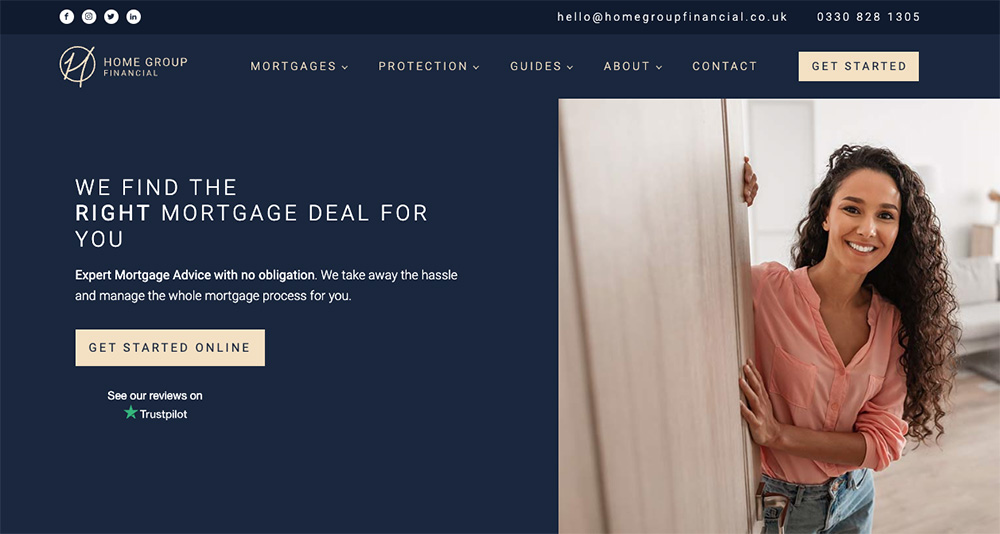
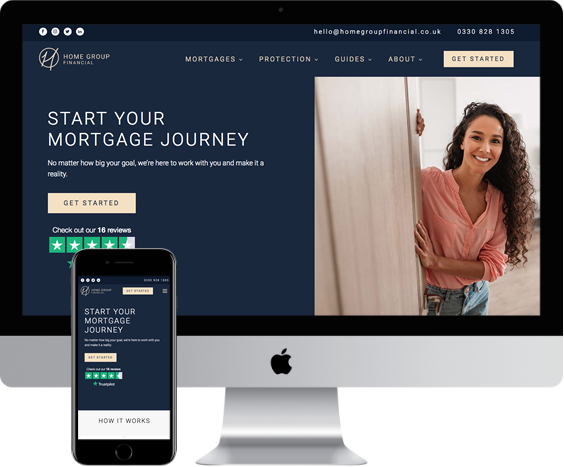
Home Group Financial Website

Home Group Financial is a Wiltshire-based Mortgage Broker and Advisor, providing advice and recommendation on mortgage, protection and insurance products to clients nationwide. Home Group Financial tasked 4D Digital with managing a new logo design, branding and website design for the company. In addition the project was to include digital marketing consultation and ongoing services for Search Engine Optimisation (SEO) and Pay-Per-Click (PPC) advertising.

Branding, Copywriting, Web Design and Marketing

The Home Group Financial brand reflects the bold, professional, yet approachable outlook of the company.

Home Group Financial Branding

The logo is designed to be minimal, creative and versatile. Importance is placed on it’s ability to be used in a wide variety of digital and print environments

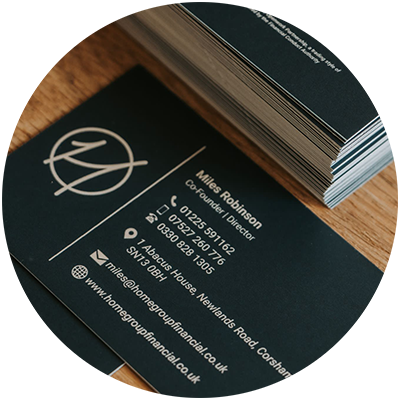
Home Group Financial - Business Cards
HGF Logo

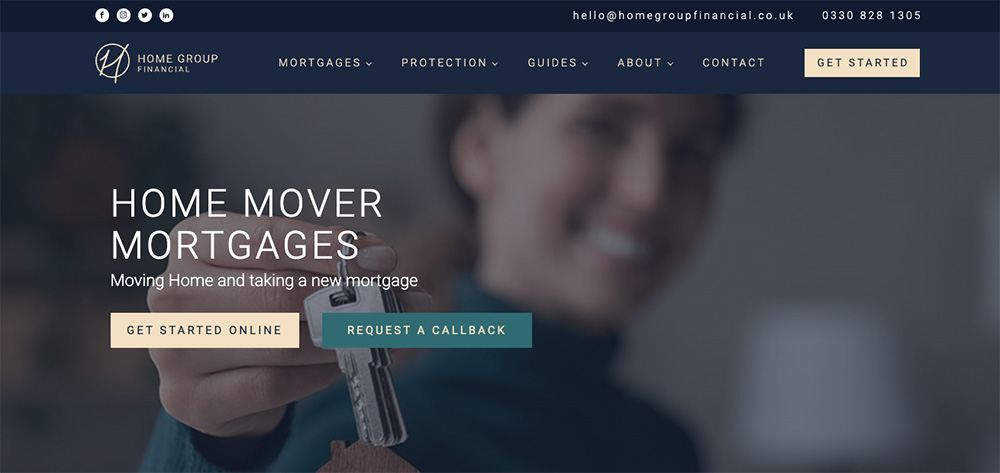
The website design builds on the Home Group Financial brand and logo, and further reinforces the main principles of simplicity, clarity and minimalism. Website content is subject to a thorough copywriting assessment during website build.

Home Group Financial Branding and Website

Initial research and analysis is carried out in preparation for ongoing marketing via SEO and PPC campaigns, managed by 4D Digital.

Client CRM integration

A key element of the website development is integration with the clients existing sector-specific CRM software. All new enquiries from the website automatically feed into the CRM, notifying advisors and providing feedback to potential customers.

Latest Update

Since its launch, the brand and website developed by 4D Digital have enabled Home Group Financial to progress and look forward to its next phase of growth. 4D Digital are delighted to partner with HGF to continue this expansion by offering ongoing marketing and website development services.

View websit

4D Digital have been extremely helpful in designing and producing a fantastic website for my business and supporting the initial digital launch of the site. Chris is knowledgeable, has a wide-reach of contacts to support small to large projects and most of all trustworthy – very important in a digital market where I have little knowledge. I would recommend 4D Digital without hesitation.

Miles Robinson – Founder & Director, Home Group Financial

Case Study – Balloon Letting Co.

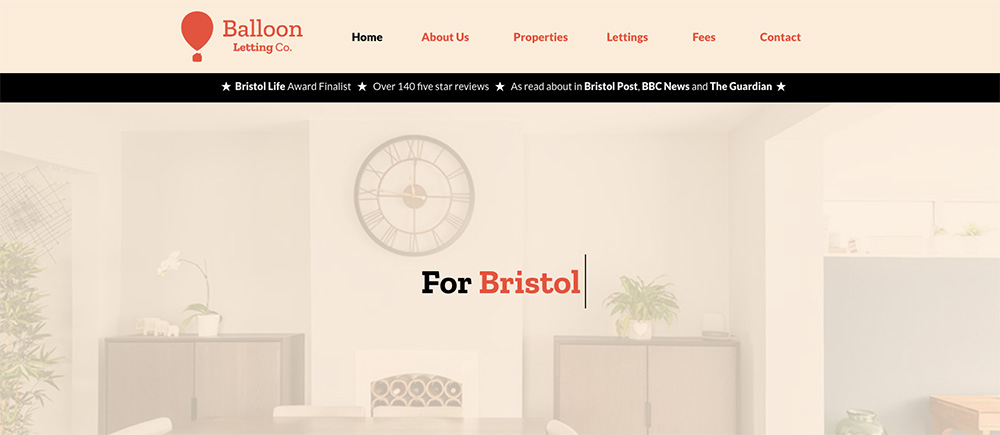
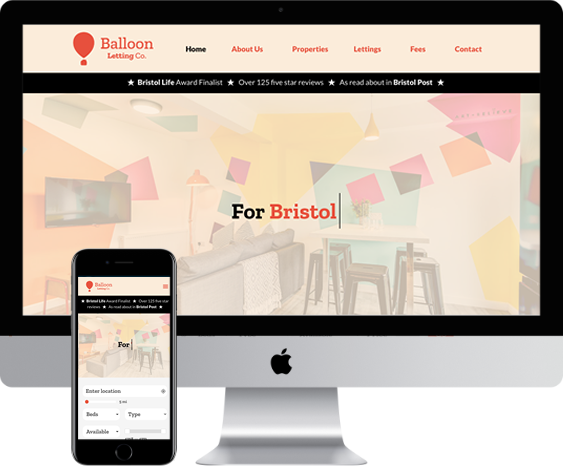
Balloon Letting CO website

Balloon Letting Co. are a letting agent based in Westbury-on-Trym, Bristol. Founded by proud Bristolian Ben Giles, the company has rapidly grown it’s ethical brand over the last two years to become one of Bristol’s up-and-coming rental agencies. In a hugely competitive market, Balloon Letting Co. needed to upgrade its online presence in order to maintain growth and build its business.

Website Design & Development

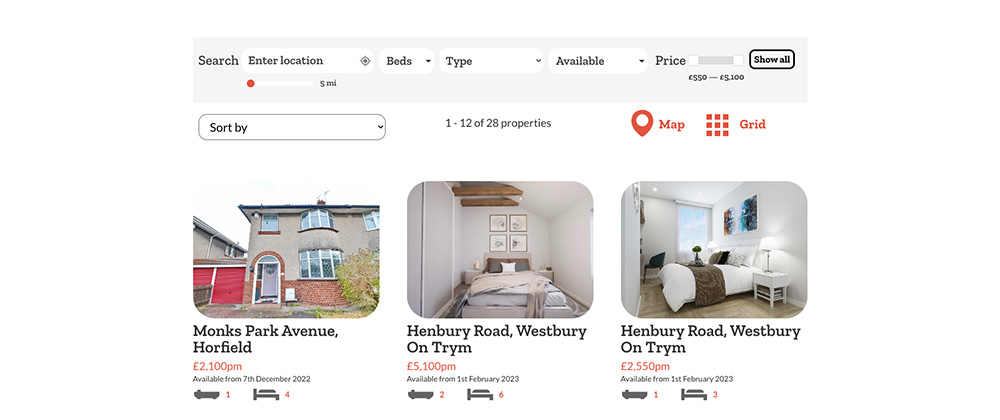
Working closely with graphic design agency Bara Studio, 4D Digital integrated the existing client property CRM with the new website design and marketing strategy. Particular emphasis was placed on ease of use for the internal Balloon Letting Co. team, with automatic upload of new property information to the website an important factor. A fully bespoke website search was built in order for website users to quickly find suitable properties in their location.

Balloon Letting CO website

SEO Marketing Strategy

Alongside the website build 4D Digital worked on a marketing strategy, with SEO optimisation a key area. Building on a strong existing social media presence, 4D targeted key areas that would benefit ongoing investment.

Balloon Letting CO website search and property display

Aiding Growth

Launched in Spring 2022 the Balloon Letting Co. website has provided a successful platform to aid and maintain growth for the company. SEO progress in the first year is already showing benefits, with regular enquiries being generated for the team.

Balloon Letting Co.

“4D Digital have been absolutely fantastic throughout our work together over the past 12 months. Chris is incredibly knowledgeable and professional and 4D have launched themselves in to our project with a huge amount of enthusiasm for what we’re trying to achieve. I would thoroughly recommend.”

Ben Giles – Managing Director, Balloon Letting Co.
Balloon Lettings Website

Web Design for Small Businesses

web design for small businesses

Designing and building a new website, or redesigning an existing website, can seem like a daunting task. To small business owners a new web design is often something that gets put off due to the thought of tackling the project whilst already running a demanding business.

With nearly two decades of experience in developing websites for small businesses, we have the experience in what it takes to create an engaging and successful business website. Whether a startup or an existing business, getting the results you are looking for can depend on a number of key steps and factors, which we outline below.

web design for small businesses

Register a Domain Name

There are many factors to consider when choosing a website domain name. Some of the most important factors include:

1. The domain name should be easy to remember.

2. The domain name should be short and simple.

3. The domain name should be relevant to your business or website.

4. The domain name should be available.

There are many places to buy website domain names. Some popular options include GoDaddy, Names, and Ionos. Should you wish to, 4D Digital can quickly check availability and register a domain name for you.

Website Hosting

A website host is a company that owns and operates servers that are connected to the internet. When you create a website, you need to store the files that make up your website on a server. Website hosting provides space on a server for your website, as well as the technology needed to connect your website to the internet.

There are many factors to consider when choosing a website hosting provider. Some of the most important factors include:

  • Price: How much does the hosting provider charge?
  • Reliability: How often is the website down?
  • Customer support: How responsive is the customer support?
  • Features: What features does the hosting provider offer?
website hosting for small businesses

Consider your goals

Some goals that your website might have are to increase sales, to get more leads, to increase brand awareness, or to generate more traffic.

More general aims for your new website should include the following:-

  • To be user-friendly and easy to navigate
  • To have a clean and modern design
  • To load quickly
  • To be responsive (to work well on mobile devices)
  • To be optimised for search engines
  • To be secure (with an SSL certificate)
  • To have contact information and a contact form
  • To have a blog or news section

Create a memorable and engaging website

The best way to create a memorable and engaging website will vary depending on the type of website and the audience you are trying to reach. However, some tips to create a memorable and engaging website include using high-quality visuals, telling a story, and making it easy for visitors to navigate and find the information they are looking for.

At 4D Digital we work with each client to design a website that engages the user and provides clear access to all website content and information. We believe that the content of a website has to take priority when designing layout and structure. This then enables website visitors to navigate through the website more easily and access information quickly.

Optimise for search engines

There are many things you can do to optimise your website for SEO. Some important things to consider are:

  • Making sure your website is accessible to search engine crawlers
  • Creating keyword-rich content
  • Using relevant keywords in your titles and headings
  • Creating backlinks to your website from other high-quality websites

Optimising for SEO will vary depending on your website’s context and application. For more in-depth information we are happy to advise and talk through your requirements. At 4D Digital we offer full Website and SEO Audits as part of any SEO service.

Implement a maintenance plan

A website maintenance plan is a service that provides regular updates and security for a website. This can include things like updating the website content, adding new features, and keeping the site secure.

Should your website be based on the WordPress platform, it’s important to keep up-to-date with plugin, theme and framework updates.

Promote your website

There are many ways to promote a website. Some of the most common include SEO (search engine optimization), social media marketing, and content marketing.

For Social Media some common methods include creating accounts for the website and sharing links to the website on these accounts; creating promotional content such as videos or blog posts about the website and sharing this content on social media; and running social media ads that link to the website.

There are a number of ways you can use content marketing to promote your website. You can use blog posts, infographics, videos, and other forms of content to attract attention to your site and encourage people to visit it. You can also use social media to share your content and drive traffic to your website.

web design for a small business

Commonly asked questions

Does my Small Business website need a content-management system?

A content management system (CMS) is a website framework that allows you to create and modify digital content. Most websites are built with a CMS which allows the business owner to modify and add content themselves.

If you want to create a Small Business website, you will most likely need a CMS.

What is UX and how does it affect my website?

UX, or user experience, affects your website in that it determines how easy or difficult it is for users to interact with your site. A good UX will make it easy for users to find what they’re looking for and navigate your site, while a poor UX will make it difficult for users to use your site.

Should I use WordPress for my website?

WordPress is a good choice for many websites, but it may not be the best choice for your specific website. At 4D Digital we specialise in developing for WordPress but will advise on the framework that we fell can best help your business reach its goals.

As a small business, do I need to be ready for e-commerce?

E-commerce refers to the buying and selling of goods and services over the internet. This can be done through a variety of different platforms, including online marketplaces, online stores, and mobile apps.

If your business has any plans in the future to sell products or services online, then good advice is to build the website framework with e-commerce enabled from the outset.

Do I need to add to my small business website every month or more frequently?

As a general rule, it is a good idea to add new content to your website on at least a monthly basis. This will help keep your site fresh and relevant, and will give your visitors a reason to come back.

How much does it cost to create a website for a small business?

The cost of creating a website for a small business can vary depending on the size and scope of the project. Generally, a simple website can cost anywhere from £500 to £2,000, while a more complex website can cost upwards of £5,000 or more.

Do you have to pay monthly for a website?

Should 4D Digital produce a website for you, you do not have to pay monthly. You may be required to pay for hosting with us, but that is separate from your website itself.

Summary

At 4D Digital we aim to use our experience and knowledge to ease the process of building a new website and, hopefully, even make it an enjoyable task. Please get in touch with us if you would like to talk further about your business website.

Home Group Financial

“4D Digital have been extremely helpful in designing and producing a fantastic website for my business and supporting the initial digital launch of the site. Chris is knowledgeable, has a wide-reach of contacts to support small to large projects and most of all trustworthy – very important in a digital market where I have little knowledge. I would recommend 4D Digital without hesitation.”

Miles Robinson – Founder & Director, Home Group Financial

Website launch – Transition 15

Transition 15 Workshop

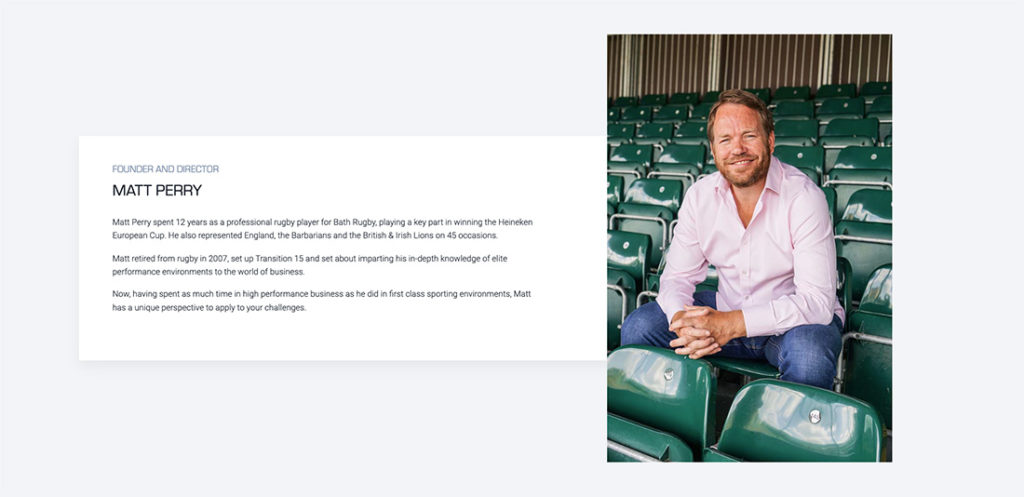
Founded by ex-professional rugby international Matt Perry, Transition 15 combine world-class sport and business methodology with corporate coaching expertise. Transition 15 earlier this year asked 4D Digital to develop a new website, which was to include new video content and photography of their team.

Clean, responsive website

Using the WordPress framework for speed of build, 4D worked to migrate existing content into the revised design. A clean, modern feel to the website was to be key, keeping the information on methods and programmes Transition 15 provide easily accessible.

Video & Photography

Supported by Matt Doherty and his team at Bara Studio in Bristol, we were delighted to provide superb new video and photo content for the website. Helping clients feel and act naturally whilst in front of the lens is a skill not to be underestimated!

Ease of use for client updating

After training for the internal team on updating and managing the content, the website was launched in August this year. Additional support will be provided post-launch in marketing and maintaining the website.

Matt Perry - Transition 15

“4D Digital have been superb in helping us develop our new website – from defining key requirements with a website audit to bringing new ideas to life. The level of support, advice and guidance has been fantastic. It’s a real pleasure working with 4D Digital.”

Matt Perry – Founder & Director, Transition 15

Website launch – NVH International

NVH International Logo

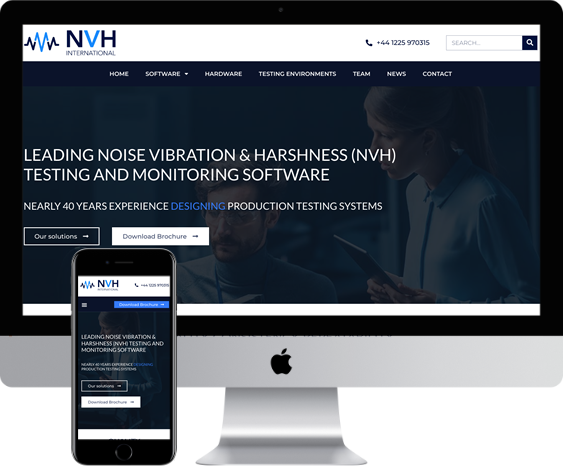
NVH International are a leading Noise Vibration & Harshness (NVH) testing and software supplier based in Bradford-on-Avon, Wiltshire. Formed following the acquisition of the division from Anthony Best Dynamics, NVH are looking to continue building on their 38 years of industry experience.

Brand, logo & website design

Having approached 4D Digital in the spring of 2022, NVH required new branding and website design in a relatively short time frame for the launch of the new company. 4D worked with the team at NVH to develop a brand guidelines, logo and website design. Clear access to technical information was key to the success of the website project.

NVH International Logo

CMS Integration

A core element of the website included integration into internal client CMS tools. NVH needed seamless progression of prospective enquiries to fit their sales processes. Particular emphasis has been given to all email form and contact enquiries as part of ongoing lead generation.

Further support

Over the coming months 4D Digital look forward to working with NVH International to continue development of the website, reinforcing its position as a key marketing tool.

NVH International website

How Google’s latest update could affect your website rankings

Search Engine Illustration

In June this year Google began rolling out a major change to the way its search engine rankings are displayed. This is important because in the UK over 93% of all searches use Google, and many businesses rely on search engine traffic to generate new enquiries through their websites.

Although Google already had user experience factors within its algorithm, the new update was to include a revised Page Experience ranking method. Previously websites were encouraged to be mobile- and tablet-friendly, and to enable secure browsing through use of HTTPS connections. The Google Page Experience update, however, included a number of new ranking factors, and after some delay was rolled out from mid-June 2021.

Search Engine Illustration

What are the new ranking factors?

A core focus of the update was to include metrics involving how fast your website page loads. Firstly, Google checks to see how long it takes for the most important content on the page to load. This largest contentful paint timing (LCP) is key to a good user experience, and if your website takes over 2.5 seconds to load then its ranking can be adversely affected. Large and too many images, slow scripts and poor website hosting are among the main factors that cause a poor LCP rating.

The next loading factor included is a measure of how the page loads visually. If you’ve ever noticed the elements on a page moving around and changing position as a page loads (often caused by too many adverts on the page), then you’ve seen what Google refers to as Cumulative Layout Shift (CLS). A low CLS score is indicative of a website that loads smoothly and allows the user to start viewing content without too many interruptions.

If you’ve ever had to wait for a page to load before being able to complete a form, such as a contact page enquiry, then you’ve suffered from First Input Delay or FID. This delay is another sign of a slow loading page, as website code is required to load before your browser lets you enter form details. Frustrating to the user, and another usability factor that Google looks at.

Non-intrusive advertising

The last major metric Google has introduced is around the use of advertising on website pages. Not considered to be an issue in itself, the problem can arise (and we all know the media/newspaper websites that are the worst offenders) when a page has so many adverts and popup messages that the page content itself becomes difficult to access. Again, within the theme of keeping usability at the forefront, if adverts are used on a website they need to load quickly and efficiently, with minimal interruption to the main content. If not, the website will start to lose importance as far as Google is concerned.

How can these Page Experience factors be measured?

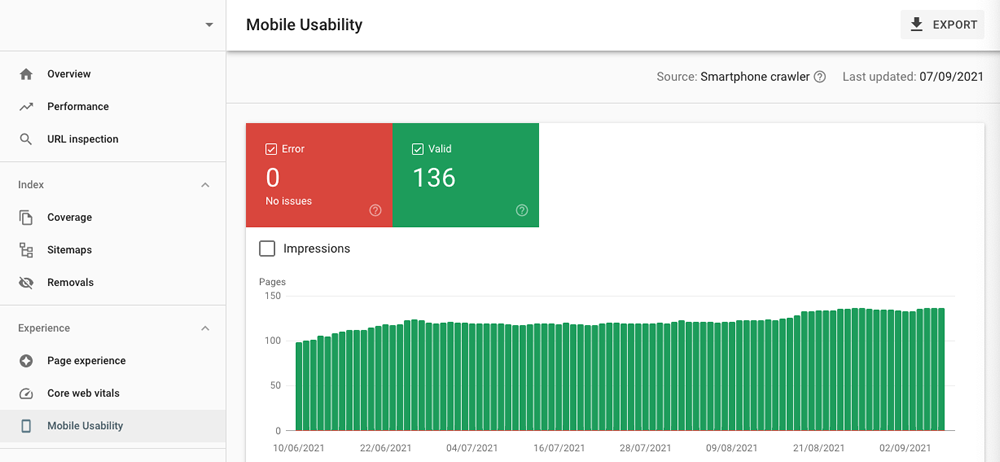
Helpfully, Google has added to its Search Engine Console tool a section for Page Experience. This includes data on Core Web Vitals as well as a report on the mobile usability of your website. Building over time as Google measures how users interact with your website, the data provided indicates which usability areas are performing well, and those that need attention.


Google Search Engine Console – Mobile Usability Report

Existing ranking factors still matter

Although these new Page Experience ranking metrics are seen as important by Google (and give an indication of how its algorithm may alter over the next few years), the existing reasons why your website will rank highly on search engines still very much remain. If your page has content that is relevant to the search term and is regularly updated, within a website that is easy to use and well presented, then you are going a long way to ranking highly for that search term.

If you think your website would benefit from some work on the points we’ve raised above, or would just like a view on what may be needed to improve it’s performance, please email us on contact@4d-digital.co.uk or call our office on 01249 561010.

Case Study – Stronghold Healthcare

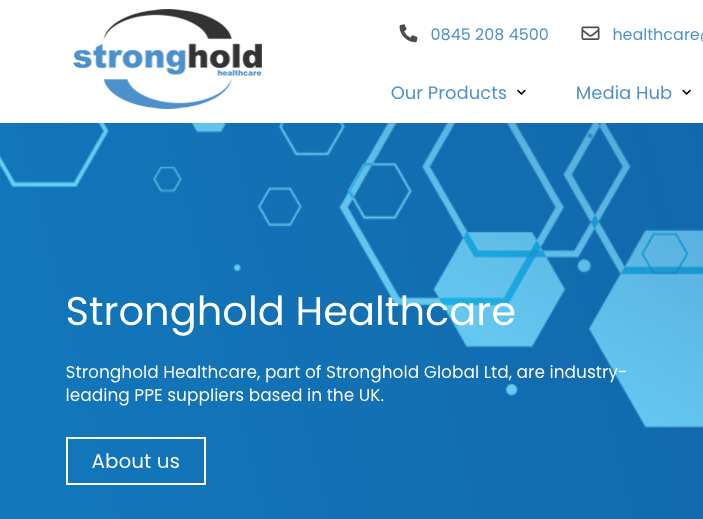
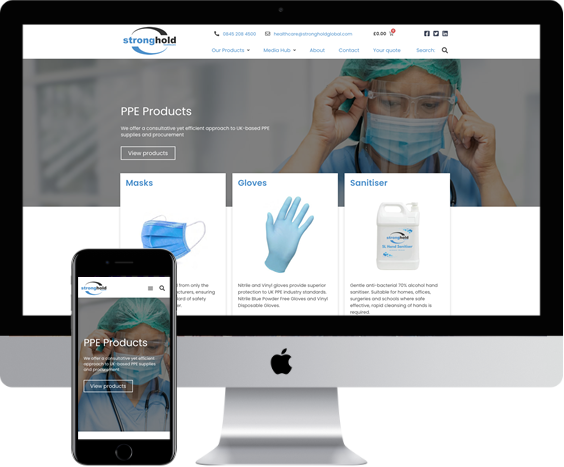
Stronghold Global are an established and growing supplier to trade of workwear and business goods throughout the UK. Stronghold required a new website to be quickly deployed in order to react to market changes – specifically to provide PPE supplies due to the second wave in the UK of the COVID pandemic. A short deadline of four weeks was needed in order to be able to offer both quoted goods for trade volumes and paid orders for new customers. 

4D Digital recommended existing branding for the Stronghold Global to be used as the company is well known within it’s target market, but subtle amends were used to enable the Stronghold Healthcare website to have it’s own identity.   

Stronghold Healthcare within the Stronghold Global brand

The WordPress framework was used in conjunction with WooCommerce as an ecommerce module to enable fast development prior to product and content entry. Management of the website content, orders and products by the internal team was to be a key requirement post-launch.


4D Digital worked swiftly with the team at Stronghold to specify the website requirements and deliver the website ready for launch earlier than anticipated. Orders and quote requests were active within a day of launch.  Particular importance has been placed on continual development of the website, with marketing channels set up with the internal CRM for access by the UK sales team. 

Ongoing support is in place with internal CMS training and website maintenance. 4D Digital continues to work with Stronghold on SEO and paid ad campaigns to progress the website.